How to Learn to Meditate
I think I can break my personal meditation history into three broad stages: Before encountering The Mind Illuminated, during encountering The Mind Illuminated, and after encountering The Mind Illuminated
Ben Christel (who writes a newsletter about staying sane on the internet which also touches on mindfulness practices) asks
How does a person learn to meditate? What was it like for you?
This is kind of a slippery question. What does it mean to learn to meditate?
The basic mechanics are pretty simple. Sit down, don't move, repeat. I learned that when I was about six, in Tae Kwon Do class. I added a little bit of sophistication to my understanding — encountered real Zen — sometime in late elementary school, reading the book Writing Down the Bones.
Except— is there an object of the meditation or not? If you have an object, what object? If you have an object, what do you do when the mind wanders? What do you do before the mind wanders? What is "doing," anyway, when you're talking about the activity of the mind? If there is no object, what do you do when you find yourself thinking about something anyway? Should you try to stop yourself from thinking? Should you try to stop yourself from trying to stop yourself from thinking How should you sit? How long do you do it?
The Mind Illuminated says the object of meditation should be "the breath sensations at the tip of the nose." I've spent a lot of hours trying to decide if it was a problem that what I was paying attention to was really more the breath sensations just inside the nose.
So there's this technical content. And— maintaining a daily practice is deceptively hard. I've never managed it for more than a month. There's something about the 30 day marker that makes me withdraw.
And then, if you master the technical content— or just maintain a regular practice for long enough— there's what I consider the really difficult part of meditation, which is dealing with what happens when I'm meditating regularly.
I think I can break my personal meditation history into three broad stages: Before encountering The Mind Illuminated, during encountering The Mind Illuminated, and after encountering The Mind Illuminated
Before: "Breath in through your nose, out through your mouth." Writing Down the Bones. "Just sit." About a year trying to maintain a daily meditation practice using the app Headspace. A lot of on-and-off practice. The focus of my meditation was mostly managing distressing feelings. This lasted until my late twenties.
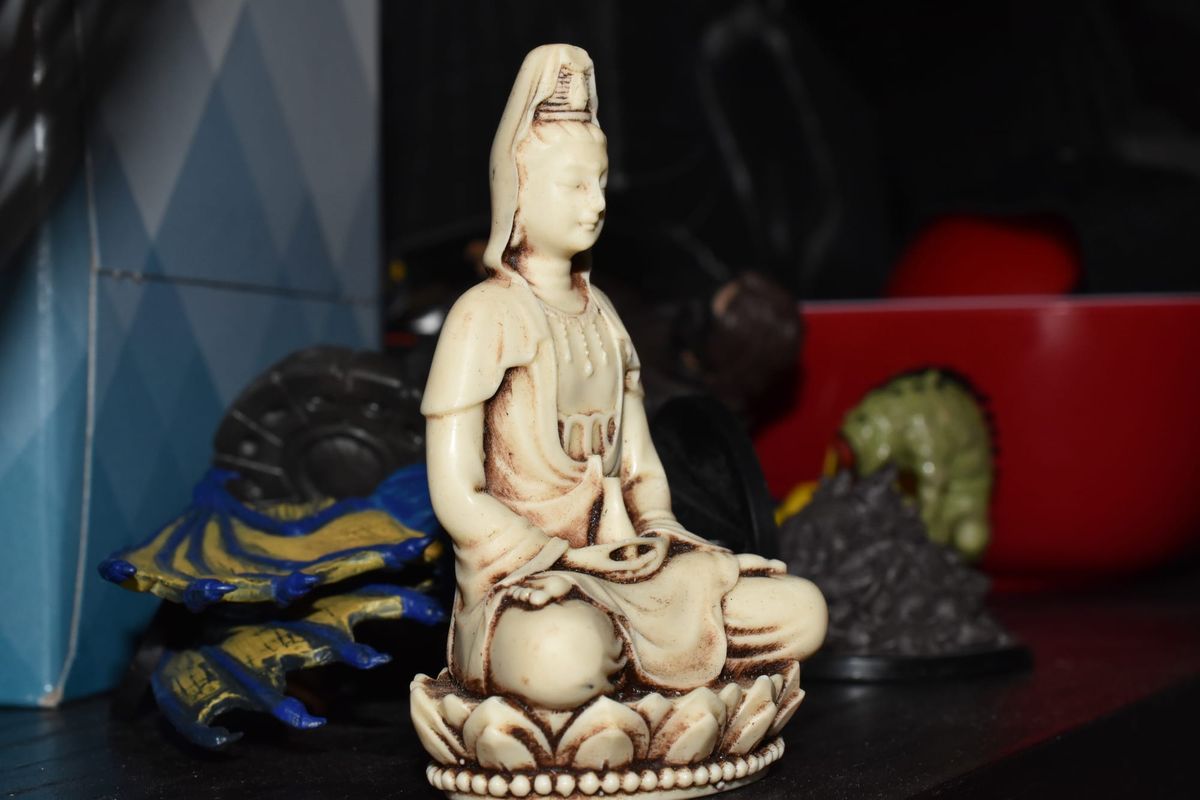
During: A very serious attempt at really doing daily meditation, as prescribed in the book, with an earnest effort to have the goal the book recommends of achieving awakening. (A lot of the time my goal was, instead "be calmer," or "experience meditative joy.") I practiced daily, worked up to forty minutes. I set up consistent spot to meditate and (the book doesn't recommend this but it felt right and it still feels right) set up an altar and read The Heart Sutra a lot.
I made a lot of progress. I was able to maintain stable attention with focus on a single object, no mind wandering, and only subtle distractions for forty minutes. Most of my meditation sessions were calm and relatively pleasant, if sometimes boring. I leaned into the restlessness as a sign of progress.
I also had a couple of awful meditation experiences that eventually made me stop meditating for a few years.
Something I find difficult to write about is that for much of the time at Pivotal I was very unhappy. Work was good but it was often the only thing that was good. I was often angry, and often very sad. I find it difficult to write about why, except to say: I needed about five years of therapy that I hadn't started.
An example, maybe, is useful. Around this time a teammate got really into this deck of emotion cards. He wanted to start every pairing session with each of us choosing a card that represented our current emotional state, and then talk about it a little bit. Pair programmers have a lot of these tricks for leaving "what's going on outside the pair, outside the pair." You acknowledge it and then you set it aside.
Maybe the second or third time he pulled this deck out with me, I picked the card that said, "Shame," and said I didn't particularly want to talk about it. I didn't see the deck again after that.
Point being, I was this bundle of unexamined impulses and reactions, I was taking actions I did not like and I did not know how to stop and I was feeling very bad about them afterwards, and then I was suddenly sitting for forty minutes a day with all this unresolved psychic "stuff," and encouraging my mind to sit on a single topic for extended stretches of time.
And my mind was like, "Wow, this is great! Before when we tried to think about something that was making us sad or anxious we'd get distracted from that really quickly, but now we can sit and think about one specific thing we feel guilty about for hours."
I had one particular disorienting session in Basel, Switzerland, because I wasn't going to let little things like "being alone in a foreign country" or "being horribly jet lagged" stop me from keeping up that forty minutes of meditation every day streak, where I thought about almost nothing but one specific moment in one specific recent conversation, and the difficult feelings associated with that conversation, for the entire session.
Shortly after that I stopped meditating at all.
I understand that this isn't an unusual experience during meditation. The Mind Illuminated has some advice on how to handle it. I followed some of that advice, and it did help.
After: I continued to sit on and off. I'd get up to ten, twenty minutes, and then stop, because I was scared of what could happen if I "got good at it" again. I talked to my therapist about it. I came to the conclusion that what I needed was a teacher or a community. I did exactly nothing to act on that conclusion for a few more years.
When I moved to Minnesota, I started going to the Minneapolis Zen Center. On Sundays there they sit for 40 minutes, with a short break halfway through. I also attended a half-day sitting meditation retreat. (With formal Zen forms!) I've found it much easier to sit for long periods of time like that in a group. I've talked a little bit with the teachers there about some of the experiences that I've had, and why I'm nervous about getting "too into" meditation again.
I'm still meditating "on and off." Maintaining the daily practice remains one of the hardest things.
As I write this I am on day 26 of meditating for at least 5 minutes a day, at the beginning of the day. I mostly sit zazen now, which means eyes open, and no particular meditation object. (I've also been cheating a little, and meditating in bed, before I get up at all, partly out of consideration for problems I was having with my knee and hip, and partly out of an attempt to remove absolutely any barrier to daily practice.) I'm not doing any of the "following the breath" exercises, or trying to cultivate any particular quality of attention.